Just as the colors of an abstract painting or photograph can produce a certain mood, so can the colors of a building or room profoundly influence how the people using it feel. Physiologically, study after study has shown that blue light slows the production of melatonin, keeping people more alert or awake even at night. Psychologically, people associate certain colors with certain feelings due to cultural symbols and lived experiences – for example, they might perceive the color red as menacing or frightening because of its connection to blood.
Altogether, the way a room is colored can have complex effects on how its users feel, while a façade can be perceived in dramatically different ways depending on how it is colored. Below, we summarize the emotional associations of every color, assessing their differing effects as each is used in architectural space.

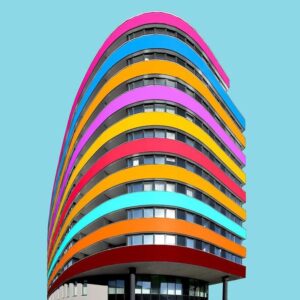
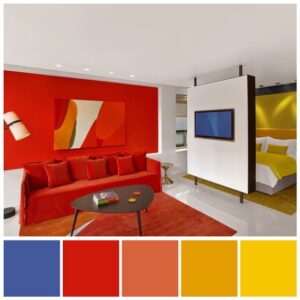
Color Psychology
The study of how different colors influence human behavior is known as color psychology. Varied colors have different meanings, implications, and psychological effects depending on the culture. Color psychology is heavily influenced by choice, besides cultural variances. Color psychology is the study of color perception and the effects of color combinations using color theory (the practical application of mixing and matching diverse colors). Carl Jung, a Swiss psychiatrist, examined the psychological effects of color in the early twentieth century. Jung finally devised a color therapy technique that allowed his patients to express themselves via colors and imagery.
Color And Their Use in Architecture
We can see that architecture acts as a giant canvas through which an architect, like an artist, expresses his/her idea and thought process. Thus, the walls to the railings of a staircase can be a statement piece. It becomes crucial to be aware of how a color would affect the user since architectural elements take u a significant amount of space in one’s cone of vision. Color may visually simulate certain features of space or convey a specific volume or architectural detail. It may also generate a variety of emotions and visual effects.
The Important of Colors in Construction
Different colors carry different meanings to different people and even in different cultures.
So, when you are trying to communicate a message through a building, there is no better way than to look for colors that not only follow your culture but also people’s feelings.
Choosing the right colors in the building also creates a sense of communication between the people in that building.
reflect the essence of the building
Color is one of the most powerful expressive elements in architectural design that is used to emphasize the character of the entire building.
You can incorporate different materials, patterns, and most importantly, colors into your building to reflect the vision behind your brand.
Many of the world’s leading companies have paid great attention to developing sophisticated color palettes to stand out their brand among competitors and spark an emotional connection with customers as well as employees.
Impact on our psychology
We are all wired differently based on our experiences, associations, and abilities, and this affects the way we perceive visual stimuli.
Colors are the determining factor in how different people respond to their surroundings, and they can either improve moods of calm or joy, depending on how they are used.
A lot of color research related to principles of psychology states that the colors we choose to build and design a building have a long-term effect on our subconscious mind.
This is why all advanced builders never neglect the principles of color psychology while planning the architecture of a building.
It is contained
Color is a visual language that all of us understand, and it affects our emotions and mood in many different ways.
This is why, during the construction of a new building or the renovation of an old building, choosing the right color palette is essential to achieving the functionality of that space.
The color is light, beautiful, and harmonious, but also mental balance, comfort, and excitement.
Colors in Architecture are necessary to embellish, highlight, illuminate and separate spaces … and also to transmit sensations and comfort.
An example: The color of a building is like the presentation of a product and acts as a stimulus care to create a first impression, favorable or negative. The interior colors influence our body, character, behavior, and mood.
The choice of color is therefore based on static factors and also psychological, cultural, and social factors.
w10fi
June 5, 2023
test